
Prescription abandonment is not only a pharmacy cost problem. It is a warning sign that the member experience is breaking quietly.
When members are frustrated with their healthcare benefits, they do not always file a complaint.
They do not always call customer service at the plan. They do not always call HR. They may not even tell the prescriber who wrote the prescription. In many cases, they make a decision in the moment, absorb the frustration, and move on.
That is especially true at the pharmacy counter.
A member goes to pick up a prescription. The pharmacist scans it, the register calculates the price, and the number is not what the member expected.
Then comes the moment of truth.
Do I pay, or do I go?
Most of us have been there in some version of that moment. Maybe it was a prescription. Maybe it was a test, a procedure, or a bill that arrived weeks later. The details change, but the feeling is familiar: surprise, confusion, frustration, and the sudden realization that “covered” does not always mean affordable.
Some members pay and leave angry. Some decide to wait until payday. Some plan to call someone later and never do. Some walk away without the medication.
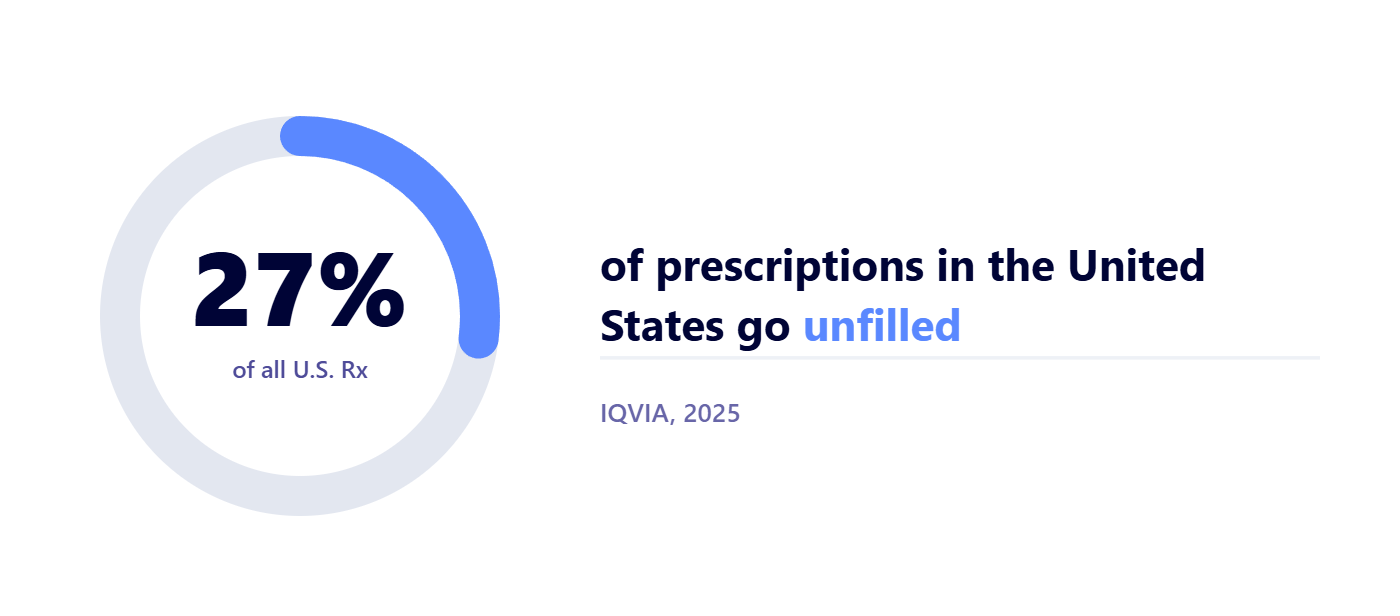
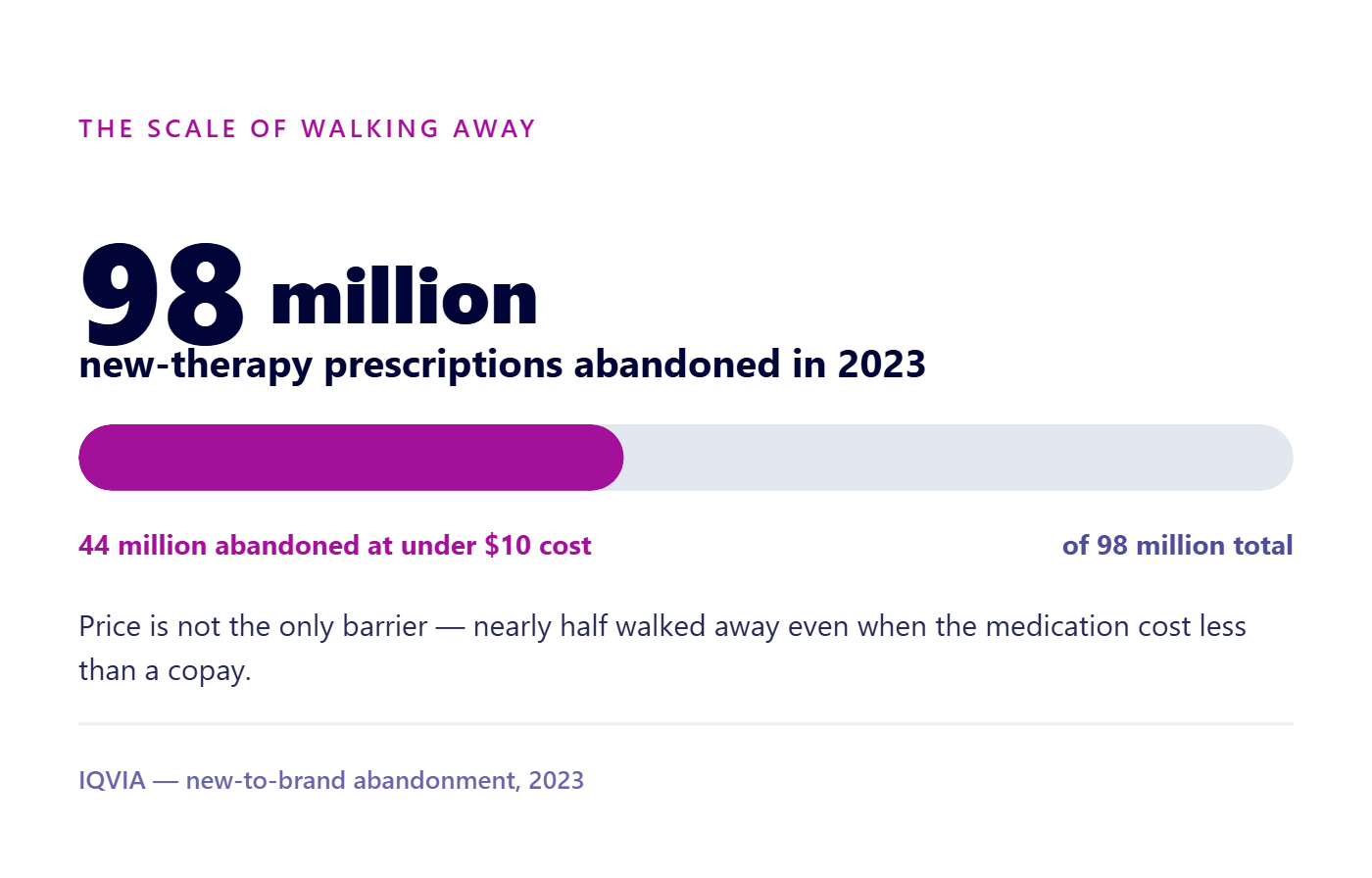
The scale of that last group is worth sitting with. In 2023 alone, 98 million new therapy prescriptions were abandoned, and 44 million of those were abandoned even when the cost to the member was under $10. Across all commercial payers today, 27% of prescriptions go unfilled. The math is not a rounding error. It is a structural failure hiding inside a normal-looking claims report.
From the employer’s perspective, there may be no complaint. From the plan’s perspective, there may be no obvious escalation. From the prescriber’s perspective, the medication may look like it was handled.
From the member’s perspective, the benefit just failed them.
That is the hidden member experience problem inside pharmacy spend. Prescription abandonment is often treated as a pharmacy metric, but it is also feedback. It tells us that the system asked the member to solve a problem at the exact moment they had the least amount of information, leverage, or support.
And when that happens, silence should not be mistaken for satisfaction.
A covered benefit can still feel unusable
One of the challenges in pharmacy benefits is that “covered” does not always mean “accessible” in the way members experience it.
A medication may technically be on the formulary. There may be a lower-cost alternative available. The plan design may be working exactly as intended. The rebate strategy may make sense on paper. The employer may have made thoughtful decisions with the information available.
But the member does not experience any of that architecture.
They experience the price they are asked to pay. They experience the confusion of not knowing why the medication costs so much. They experience the burden of figuring out whether there is another option, who to call, what to ask, and whether changing therapy is even appropriate.
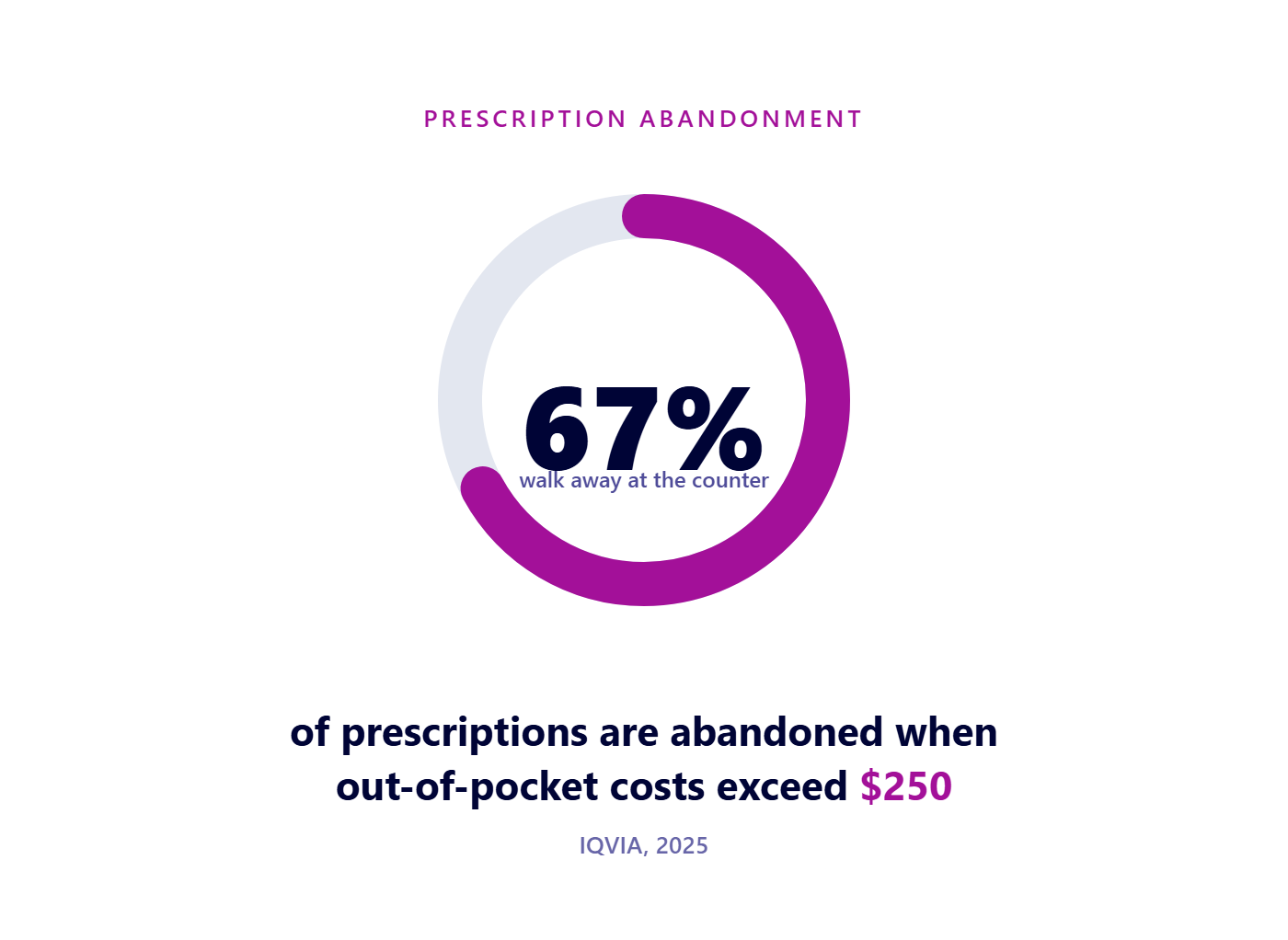
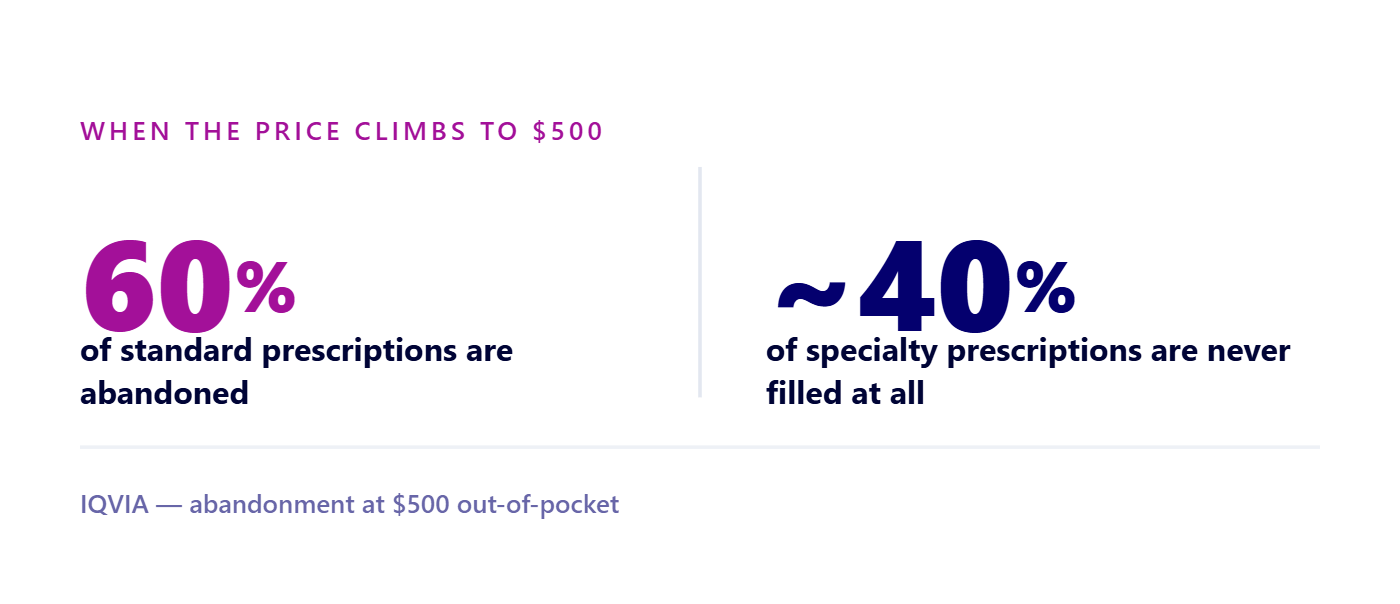
That gap is measurable. When out-of-pocket costs reach $250, 67% of patients abandon therapy. At $500, that number climbs to 60% for standard medications and nearly 40% of specialty prescriptions are never filled at all. These are not outlier patients. They are commercially insured members inside benefit designs that look reasonable on paper.
A benefit can be financially sound, contractually correct, and operationally functional, while still feeling broken to the person trying to use it. That is where pharmacy strategy becomes member experience.
The cost of silence
Benefits leaders are used to hearing about problems through visible channels: employee complaints, utilization reports, call center trends, HR escalations, renewal discussions, and claims data.
But prescription abandonment does not always announce itself that way.
If a member never starts therapy, the organization may not immediately see the story. A lower pharmacy spend number may look like successful cost management, even when part of the story is missed care. That is the risk of measuring pharmacy only through claims and spend. The absence of a complaint does not always mean the benefit worked.
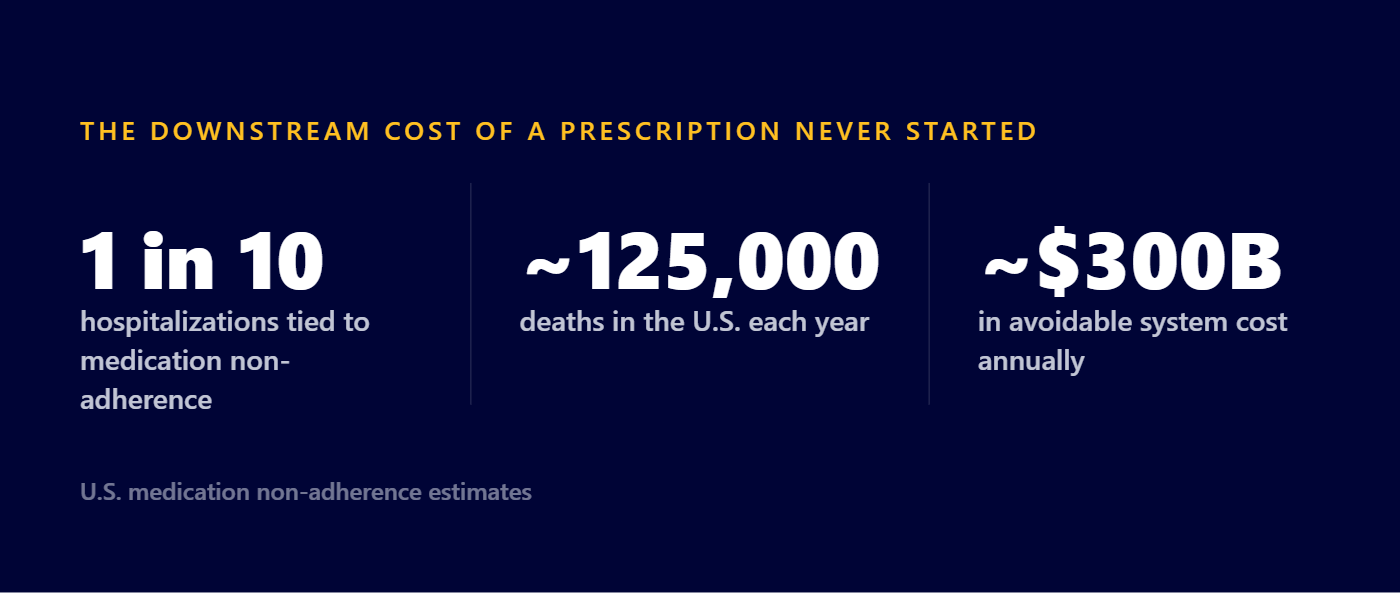
The downstream consequences are not abstract. Medication non-adherence, of which abandonment is a primary driver, contributes to 1 in 10 hospitalizations and roughly 125,000 deaths in the U.S. each year, at a system-wide cost approaching $300 billion annually. Those numbers represent real exposure for plan sponsors and employers, not just public health statistics.
For employers, consultants, and benefit leaders, that should raise a different kind of question. Not just, “What did we spend?” but “Where did members get stuck before the spend ever happened?”
That question belongs in the pharmacy strategy conversation.
Stop making the member the workaround
Too many healthcare savings strategies depend on the member becoming the workaround for a complicated system.
We ask members to compare prices, search for coupons, understand formularies, call the plan, call the doctor, use the right pharmacy, ask the right question, and somehow know whether a lower-cost medication is clinically appropriate.
Some members can do that. Many cannot. And even the most capable member may struggle when they are sick, stressed, newly diagnosed, caring for a family member, or managing multiple medications.
That does not mean members are disengaged. It means the process is too hard at the wrong moment.
If the savings strategy depends on the member discovering the better answer after they have already been surprised at the pharmacy counter, the system has waited too long.
The better opportunity is upstream.
The right intervention should happen before the member is standing at the counter. Before confusion turns into abandonment. Before frustration turns into distrust. Before the benefit becomes another healthcare experience that technically worked, but practically failed.
The member experience lens
This is why pharmacy cost containment and member experience cannot be treated as separate conversations. The best pharmacy strategies do more than reduce spend. They reduce unnecessary burden, preserve clinical trust, and make the lower-cost path easier to identify before the member is forced to navigate it alone.
That requires intervening before the prescription is written, not after it is abandoned.
RazorMetrics is engineered to do exactly that. Instead of routing cost decisions through the member–the person with the least information and the least leverage at the moment of decision–we go directly to the prescriber. The physician sees the lower-cost option, makes the clinical call, and the member never faces the sticker shock that drives abandonment in the first place. It is a physician-first model, and it works: RazorMetrics achieves a 76% physician response rate, because the solution fits the workflow rather than adding to it.
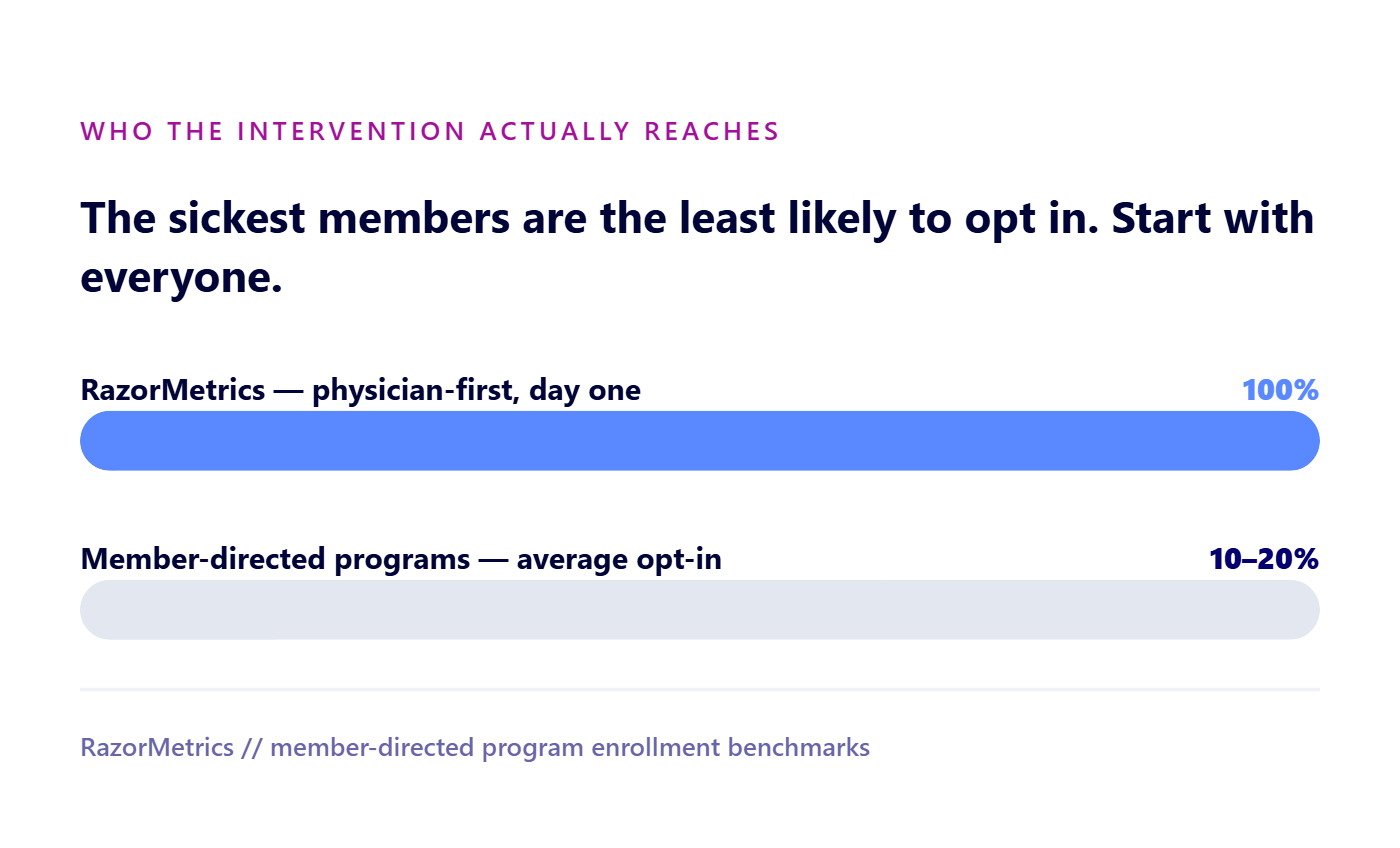
It also works at scale. Member-directed programs depend on enrollment and on average, only 10 to 20% of a population ever signs up. The sickest members, the ones with the most to gain, are often the least likely to complete an opt-in process. RazorMetrics starts with 100% of the population on day one, which means the intervention reaches the people who need it most, not just the ones with the bandwidth to ask for help.
Members do not judge their benefits only by whether coverage exists. They judge them by whether the benefit works when they need it. The prescription that gets written, filled, and started is the one that reduces downstream cost, supports clinical outcomes, and earns member trust.

Sometimes the clearest signal that something is broken is not the complaint that comes in. It is the prescription that never gets picked up.